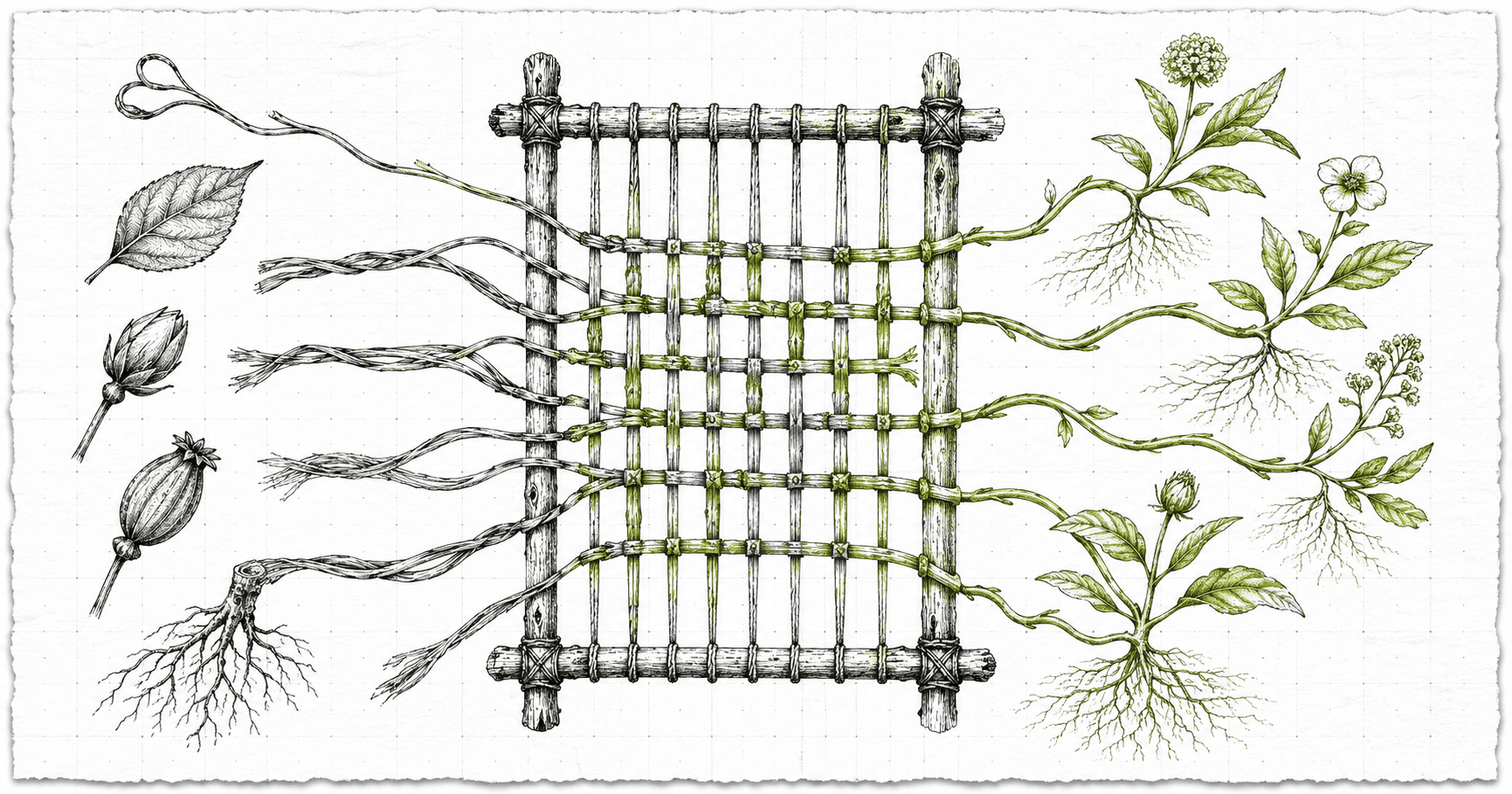
AI tools produce incoherent social posts for a structural reason, not a prompting one: most of them assign themes, quotes, and hooks independently, so every post reads fine on its own while the set contradicts itself. The fix that mattered most in our AI content pipeline architecture was a dedicated relationship-mapping stage. Here is what broke, and how we fixed it.
When you turn one blog post into twenty social posts, the hard part is not generating twenty good sentences. Models do that easily. The hard part is making those twenty posts feel like they came from one mind that actually read the source — not five interns who each skimmed a different paragraph. That is a coherence problem, and it lives in the architecture, not the prompt.
I am writing this as the person who built the pipeline, watched it fail in a specific and embarrassing way, and then rebuilt the stage that fixed it. If you are building anything that chains LLM calls, the failure mode here is worth sitting with — it shows up far beyond content.
Why Independent Generation Produces Incoherent Content
Incoherent AI social posts — the kind you get when one long-form source is expanded into a whole batch — come from generating each post as an isolated event, with no model of how it relates to its siblings. Our first pipeline did exactly that. It extracted themes, quotes, and data points from a source, then handed each prospective post a theme, a quote, and a hook — assigned more or less independently — and asked the model to write.
Every individual post passed review. The set did not.
The failure was invisible per-post and only visible per-set. Two posts would independently land on the same "safest" theme and come out as near-duplicates. A hook optimized in isolation would promise a sharp contrarian angle that the quote underneath never actually delivered. One post would imply the source argued X; another, three posts later, would imply it argued the opposite. Nothing was wrong with any single sentence. Everything was wrong with the batch.
This is not a Sembra-specific quirk. It is a general property of chained LLM calls. As one engineering write-up on multi-model consistency puts it, when you chain calls together you are not running one continuous reasoning process — you are running a sequence of disconnected sampling events that happen to share text. Each call optimizes for local coherence: it produces output that reads well given its own inputs. Reading well given its inputs is genuinely not the same thing as being consistent with what every other call concluded.
Why a Single Mega-Prompt Doesn't Solve It Either
The obvious fix is to stop chaining and stuff everything into one giant prompt — all the themes, all the quotes, all the hooks, generate the whole set at once. It does not work, and the reason is well documented.
Large language models attend most strongly to the beginning and end of a prompt and lose focus in the middle. This is the "Lost in the Middle" effect from Liu et al. (2023), and it is brutal for batch content: when you list twenty themes and forty quotes in one block, the model reliably honors the first few and the last few and quietly drops whatever sits in the middle. A single mega-prompt does not give you coherence; it gives you a different distribution of which posts get neglected.
So the choice is not "chained calls versus one big prompt." Both fail by default. The real question is what structure you put between the elements before you generate anything at all.
What Relationship Mapping Actually Does
Relationship mapping is a distinct pipeline stage that models how content elements connect to each other before any post is written. It is the difference between handing the generator a pile of parts and handing it an assembly diagram.
Concretely, after extraction, our pipeline now asks a focused question: which themes are genuinely supported by which quotes and data points, and which hooks can honestly carry which theme? A punchy hook only survives if there is a quote or data point that actually pays it off. A theme that two posts both want gets deliberately differentiated so the set does not produce twins. Then — and only then — generation runs, conditioned on those mapped relationships rather than on independent assignments.
This mirrors what the multi-model-consistency literature recommends for any compound LLM system: pin the relationships as structured facts the downstream call cannot quietly override, rather than hoping each call re-infers them from shared context. The relationship map is our version of that pinned fact register. Generation does not get to decide that this hook now means something different; the mapping already settled it.
The result is the capability we ship: posts derived from the same source are coherent as a set, not isolated fragments. That single property — set-level coherence — is what separates amplification from the 1:1 reformatting most tools do. If you want the broader picture of how amplification turns one article into weeks of posts, the complete guide to content amplification covers the strategy side; this post is the engineering underneath it.
The $0.02 Decision: Tiny Cost, Large Quality Gain
The most counterintuitive part is how cheap the fix was. The relationship-mapping stage adds roughly two cents of extra inference per post.
That number matters because of what it buys. We had already seen this pattern once before, closing a different gap: in the work I wrote up on the AI purpose gap, restructuring how instructions were positioned and forcing the model to reason before generating moved instruction compliance from 24% to 83% — and it did so for 9% less cost, because shorter, focused prompts beat longer unfocused ones. Structural changes to an AI pipeline routinely improve quality and lower cost at the same time; the tradeoff people assume exists usually does not.
Relationship mapping is the same shape of decision. Two cents a post is a rounding error. The failure mode it removes — a whole batch that feels like AI slop because the pieces do not cohere — is the thing that makes a reader unsubscribe. Crucially, this only works because the stage produces structured output that the next stage is actually conditioned on. Brand voice gets layered on top of this; if you are curious how we model the way a specific person writes, that is the brand voice extraction work, and it rides on the same coherent set the mapping stage produces.
What I'd Tell Anyone Building a Multi-Stage Pipeline
Here is the builder's caveat, because multi-stage architecture is not a magic word. A multi-stage pipeline is only better than a single prompt when each stage is genuinely conditioned on the structured output of the stage before it. Recent work on multi-LLM pipelines is blunt about this: the gains are not monolithic — they depend on task structure and draft quality, and a stage that merely re-summarizes the same text reintroduces the telephone-game drift while adding cost.
So the lesson is narrower and more useful than "use more stages." Figure out where coherence is actually lost — for us it was the independent assignment of themes, quotes, and hooks — and add a stage whose only job is to model the relationships that the independent steps were silently breaking. Pin those relationships. Make the next stage obey them. Everything else is just orchestration glue.
That is the whole story of why relationship mapping was the breakthrough: coherence in AI-generated content is a structural property of the pipeline, not something you can prompt for in one shot or edit in afterward. If you create long-form content and want to see what set-level coherence looks like in practice, Sembra turns one source into platform-native posts that actually read like they came from the same mind — because, architecturally, they did.